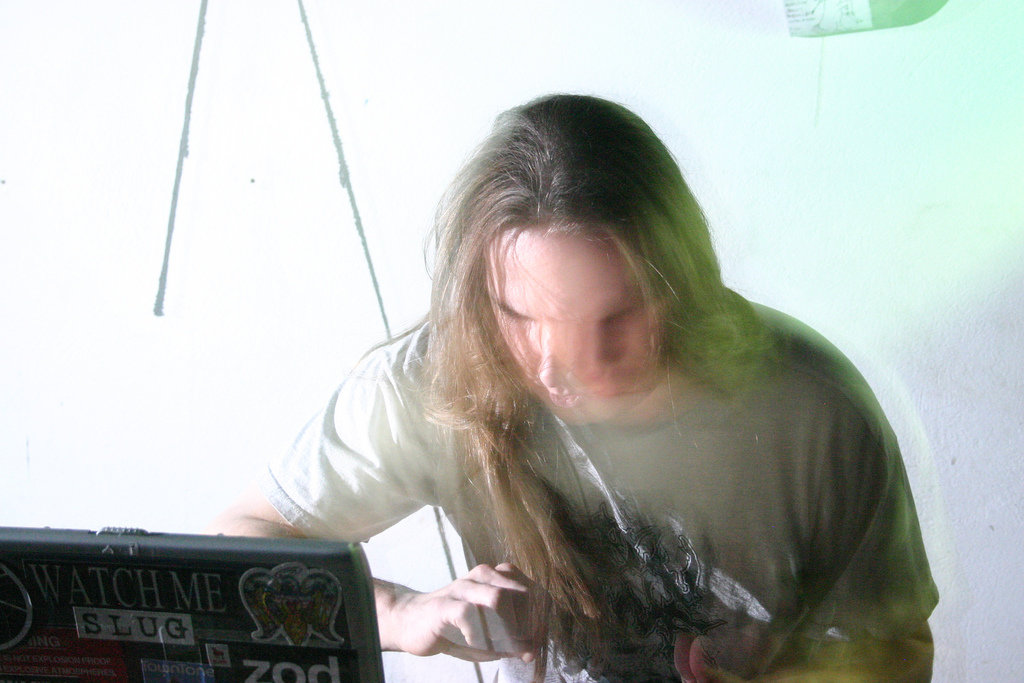
nitroii interviews... #2: BLÆRG
BLÆRG is the project of Scott Wehman from Toledo, Ohio. Now based in Minneapolis, Minnesota, his many releases (starting from 2004) behold skull-splitting IDM at worrying tempos, breakcore capable of total cerebral destruction, and all that fits inbetween.
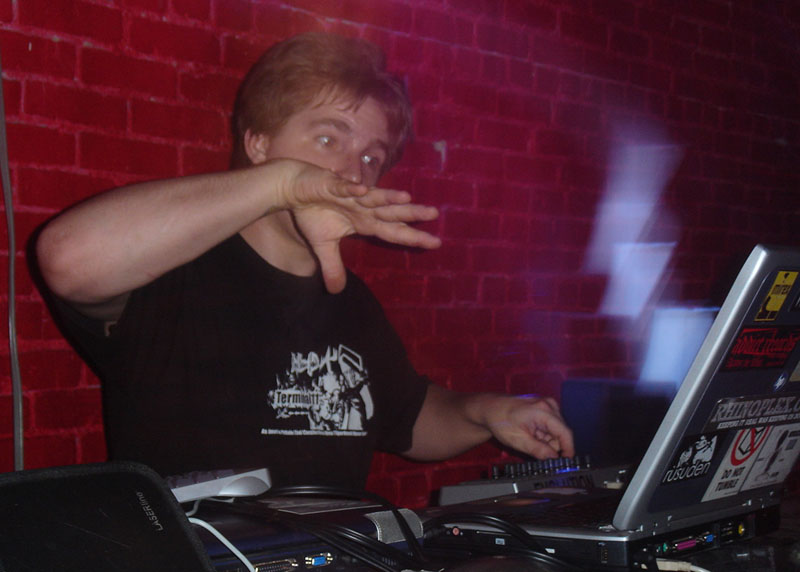
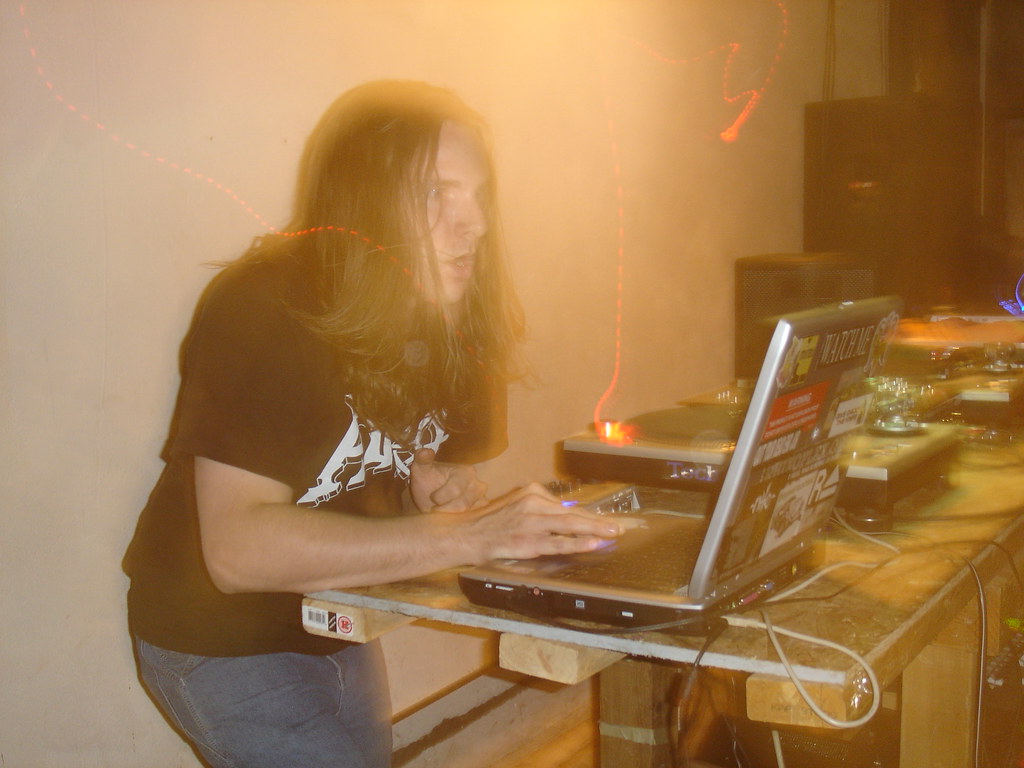
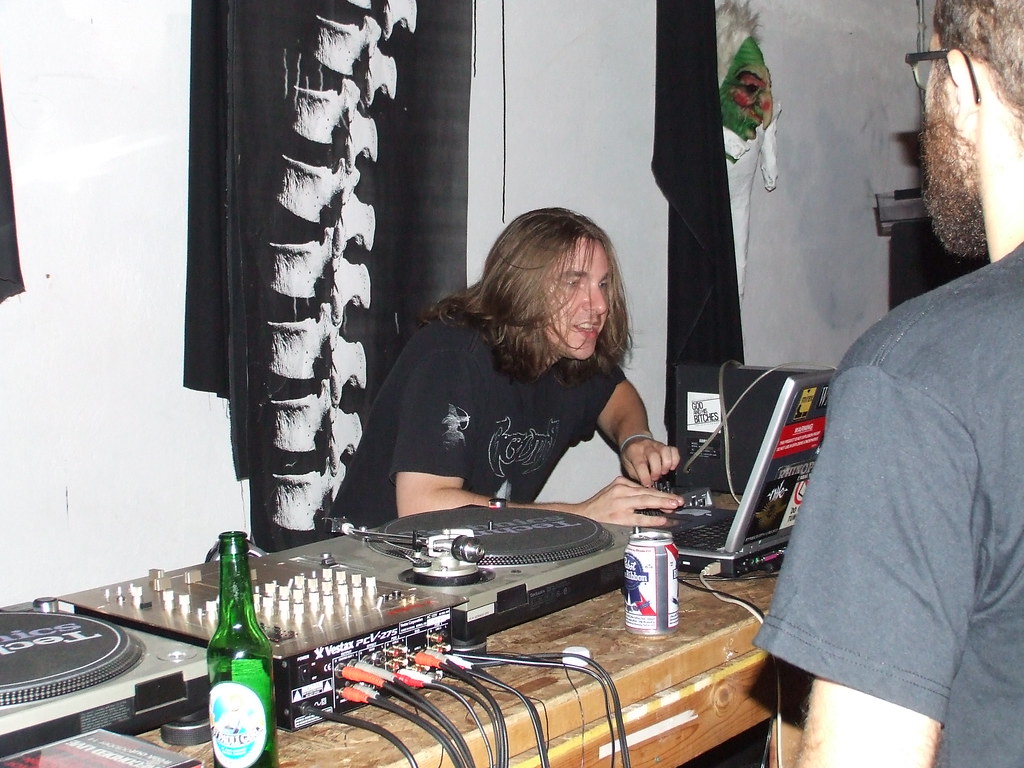
Raised in Ohio and growing up off a hearty diet of death metal and heavy metal, BLÆRG began his breakcore grind in 2002, and the rest is history. Splintered glitchy beats and the occasional out of left field sample will leave you stunned. He's appeared on labels such as FromTheGut, Bottle Imp, Mirex, and most recently, our own South England Hate Club! Feast your eyes on this - a very verbose interview (that again, pans out more like a casual conversation), that dips its toes into his introduction to breakcore through seeing Xanopticon live, Harmony Korine's film 'Gummo', mashcore and sampling, and his resolved 'feud' with Shitmat. Have a look!
O: Hello!
S: Hello, sir.
O: Hello, hello.
S: How you doing?
O: I'm good, man. I'm chilling. How are you?
S: Not bad. Getting shit done today, and I'm gonna fuck around with some new modules I got.
O: Oh, nice. If the accent's a bit too thick, just let me know. I'll repeat myself, because when I spoke to…
S: The connection might cause that as well.
O: Yeah, when I spoke to Rjyan - Cex, he had this like, Baltimore accent. And at times I was like, what? It was, it was hard.
S: I think I have... Yeah. I think I have the standard United States ‘what you would hear on TV’ accent, so it shouldn't be an issue for me, or for you rather. Mm. Yeah, I know. I can get past it. It's understandable, you know, but people from Baltimore, they're like. They're hard to understand. But you know what, I got around it.
O: That's a specific thing, yeah. Yeah. And they're going to use slang words that only they use and it's like, what?
S: Yeah, exactly.
O: Okay. Well. First thing I want to say is that I think it might have been like a couple of years back, when I heard your first album. And, it's always... I don't know. It's weird, and it’s stuck out to me, because you've had like a kind of, you know, at times an IDM style, a mashcore-ish style, but all of that fits under breakcore, but it's like, it's obvious you’ve got influences coming from a lot of places. So like, what, what influenced you, you know, to kind of put the sounds that we hear in your music, into your music, if you know what I mean?
S: Um, I think what influences me is like - I really like music that is fast and complex, but something you can still palate. It doesn't run away from you and get too complex where it's like, you know, if you're listening to like djent metal or even certain kinds of breakcore, it's so complicated that you can't follow it, like you have to consciously count the beats or that's kind of too much. I like to listen to stuff that's just a little bit… just a little bit below that. But, you know, you can still nod your head and catch it all, but it's just flying past. I like that idea, and I, you know, before I got into electronic music, you know, when I was like your age and a little younger, my thing was metal. And so I just kept going further and further into the extreme metal. And I found there's a lot of really high level musicianship going on, even though it was super underground music. And I always just found that to be really cool that people would want to play stuff and make stuff and hear stuff that was really well done and accomplished, but outgoing and just challenging and fresh and exciting and willing to take chances and stuff like that. I really like it - I like that element of almost danger or, you know, stuff that's... The stuff that like a normie person would not like, it would turn them away. I like that.
O: Yeah, for sure.
S: I like that idea that that there can be music that is very stimulating. It has a lot of shit going on, but you know, isn't so crazy that it's just noise.
O: Exactly, yeah.
S: And I tried to, I tried to take all that into what I make, and whether I succeed or not, is up to that particular day, but that, yeah, that's my main inspiration. I want to hear something that’s crazy, but also not so crazy. If that makes sense...
O: Absolutely, yeah. So I'd say, well, a lot of people know you from your full-length on Bottle Imp: ‘Dysphoric Sonorities’. It's a great album, but can you give me, you know, just like, an overview behind that album? Because there's a lot of stuff going on, and it’s treading all sorts of ground. It's a very versatile thing. And, you know, when it's me, I'm listening to music, I'd say, like, for example, you got breakcore artists who don’t put a full-length out and it'll just be breakcore all the way through like bam, bam, bam, bam. But then you've got artists as well who like they’ll switch it up, they'll throw in like an ambient or throw like a more mashup style track or they'll do like a more kind of IDM inspired track, and then obviously with your stuff I noticed that at times you skip around from place to place. So, yeah, ‘Dysphoric Sonorities’ - can you tell me about that album, you know, creating, exploring sounds, et cetera?
S: Sure. So at that point in time, you know, I'll see, that's like, what, 2008, I think. Somewhere around there. I had only, I mean, I had only gotten my first computer like five or six years before that. Yeah. And I didn't know anything about synthesis at that point. So, you know, the thing that I liked about breakcore when I got into listening to it and meeting people that were making it and stuff, was that you could just sample literally anything.
O: Yeah.
S: And I think the common thing that was really driving me at that time was always being curious and experimenting with what the combination of a few totally different unrelated samples would sound like.
O: For sure.
S: So, say I'm listening to, like, a huge range of music. I'm curious to hear all kinds of stuff. You know, I'll give anything a chance. I'm very picky, but, you know, what I like and what I want to repeat-listen to is going to be a small range, but I'm willing to listen to a lot of different things because it's always interesting, even if you don't like it. So it's like, you know, I'd hear something, you know, let's say, some kind of acapella vocal that’s from, you know, an eastern Asian country or something. Okay, well, what does that sound like if you put it up against a guitar stab or a really weird, you know, drum break that's from a metal record or, you know, what if we’re taking this thing from this part of the world, from this point in time, and that thing, from that point in the world, and, you know, from two decades later, what happens when we put them right next to each other and have them together? Does that sound interesting because of the contrast? Does it sound terrible? Because it's, you know, it's so, the disparity’s so large. And I think that was pretty much, that was like the commonality between all of the stuff I was making at that time, including the previous records – it was just 100% samples, and if you can layer two or three things that are totally unrelated, can you arrive at something that's intriguing and exciting? I always found that the most exciting thing was just sampling from a wide range of influences and material, and then combining them and trying to make it work. Now, if it didn't work, then I'll just, you know, put this to the side and maybe pair it with something else. And if it, you know, if I pair it with five, six, seven things and it doesn't sound good, we'll then just toss that. But yeah, always trying to combine and recombine and shuffle all these different types of sounds together and but make it, again, make it clean and listenable and have it, you know, not just be, it's just a bit of layered-up shit, you know, it's that's not going to sound good, but I think that was what was really fascinating to me, especially when I first got going.
O: Yeah, I hear where you're coming from, for sure!
S: It still is. And it still is, but now I'm interested in synthesisers a lot, a lot more. So that opens a whole different kind of way of making stuff.
O: Yeah, for sure. Because like, I’m always dipping my toes in a lot of different waters. Like, for me, I've always been, I've always been into like bass-heavy music because obviously I was born in the age where it's like electronic dance music was... uphill, you know, like David Guetta was flipping all these tracks and like, Swedish House Mafia and all, like, just, you know, names I remember from my childhood. Because I was, you know, born in the UK and there was a lot of that on the TV… and I was in front of the TV all day.
S: Hahahaha!
O: So it was like, I was being fed that against my will, really. Yeah, but obviously I have Kosovan, Albanian heritage, and my parents they grew up with, you know, folk music. And then when they got a bit older, you know, raving, like house and techno and stuff. Because that's what was like available there. We didn't have like jungle and breakcore and drum and bass and shit. Well, maybe drum and bass to some extent, but you know, I'm going off what my dad's told me because he was crazy, raving back in the day, but for me, I meant that, you know, exposition to all that different electronic stuff, eventually I was just like, you know what? I think I might have been 10 or 11. I was like, I'm going to do something for myself. And it was in the same way for me, I wanted to see like, how I could put sounds together, you know, that might not be necessarily conventional, but like make them work in some way. So I definitely hear where you're coming from with that, but at first it was mostly just, you know, just ripping samples and then just feeding them through Audacity. That's all I really worked with back in the day. And when I started doing like breakbeat stuff because I heard like Venetian Snares and then I heard, I think it was Shitmat after that? I know you and him might not be on the best of terms. I could ask you about that later if you if you want, haha. But, yeah, man. Yeah, so I hear what you're saying, is what I'm trying to say. I can really relate to that because nowadays, what I'm doing, you know, I just turned 16 last month. I'm doing like a lot of like heavy, heavy sample work, but I'm trying not to make it so like, overt because you've got this new wave of like mashcore producers nowadays and their whole kind of, like, their whole thing revolves around just like, like high pitched vocals and like corny synths and all of that, like sample work just pulled out of tracks from the 2000s and shit. I've always been one to sample all that stuff. I don't know, because it's just got that gritty feel to it. Not that I'm trying to act older than I am, but it's just like, I feel like a lot of what comes out today is so derivative and it lacks substance, and I think the best era to like kind of pull sounds from might have been the late 90s in the early 2000s because that's when there was so much, like, going on sonically, and people, you know, were really developing their sounds and then that was kind of like a canvas for me and others to be like, I'm going to pull this sound and do what I want with this. So like, right now, I'm working on like this kind of grimy dubstep track, for example. You know, it's got, uh, Wiley from the UK.
S: I think I've heard the name, but I don't really know that guy very well.
O: Yeah, like, it's weird because a lot of breakcore producers I spoke to, they're repping the grime music as well from the UK, which I can understand because grime's got that, you know, heavy vibe but Wiley, I'm kind of like pulling snares out of his instrumentals and like kind of time stretching them and putting all sorts of filters on them throwing them in as well, cus he uses these heavy fucking percussive sounds. And then I've got this breakcore track where I'm sampling, the movie Gummo…
S: Oh, yeah. Yeah, that was filmed not very far from where I grew up.
O: Oh, really?
S: Yeah, that's Zanesville, Ohio. Or no, Xenia, Ohio, yeah. But yeah, no, I've seen that many times. Yeah. So, what did you pull out of it?
O: I pulled out the scene where the cowboy kids shoot down the bunny boy, because when I saw it for the first time, I was like, yeah, this is hard. And it’s like, it's the same way Venetian snares brought in all these edgy samples of like, people crying and shit, haha. I was like, you know, ‘this can fit in’, but I'm more lighthearted about the way I sample. That whole dark, edgy stuff is why I think I kind of fell out of listening to Venetian Snares. This stuff's still great, but I feel like after ‘The Chocolate Wheelchair Album’, a lot of what he was doing sounded so kind of like cliche and mainstream because so many artists started doing that as well. And then I heard about like people like you, and then I was always into Shitmat from the start, and then Drop The Lime and Mathhead had some really good stuff as well. I think he passed away, but he had a really good album on uh… what's it called? I forgot the name of the label, but whatever. ‘The Most Lethal Dance’, the album was called, and it's really good. So yeah, I hear what you're saying, where you're coming from, with all that, you know, trying and put two samples together that kind of like polar opposites and make them work. Like I've had tracks where I've thrown in like, Algerian folk music and then in the next one, it will be like, grime, and then the next one, it will be like house music, or techno, but that's all that cranked up to like, 200-and-whatever BPM. But obviously, trying not to make it sound too nuanced and then, you know, make it sound like it's meant to sound good, which has worked so far, so, hahahaha, yeah.
S: Ohh, yeah. And like you were saying, about some of the mashcore artists, it's like, once, like, a microgenre like that becomes more established in itself, then it almost puts limitations on itself.
O: Yeah, exactly.
S: Yeah, you always have the background vocal. You always have the this and that, and it kind of gets like, okay, it's getting repetitive because I'm hearing, you know, it's the same basic structure over and over. And, why have the limitation? You know, it's like, we have, how many billions of hours of reported music we can sample from? We have tools we can use to make new sounds. We can do all kinds of shit. You know, I understand having some kind of… some kind of limitation, because otherwise it doesn't really have a cohesiveness to it, but, I think that people fall into a trap of doing the same thing a little too much. And then you get that samey-ness of, track after track sounding the same, or similar, and you know, there's pros and cons to that. But, yeah, after a while, you’re kind of like, ‘all right, well, I'm going to hear something else now. I've heard enough of that for now’.
O: Yeah, yeah. It gets samey, but it is what it is, I guess. Also, about Gummo, you know that was filmed in Nashville, Tennessee? It was only set in Xenia, Ohio, hahahaha.
S: Ohh. Oh, okay. I did not know that. I thought it was filmed in Ohio as well.
O: Haha, same, but I had to do my research, of course. But next thing. What's your like, experience with the scene and how might that have kind of like had an effect on your music? Like, are there artists that you've met that you've been like, yeah, ‘this guy’s awesome; I wanna do this’? Because, you know, you've had that kind of, gradual but somewhat noticeable, you know, evolution sonically. So have there been any like, experiences, maybe, you know, like dabbling in the scene - a certain event, a show, or like, an album you heard, that was like, ‘yeah, I need to do something a bit more like this’, or is what you make kind of just, you know, your own brainchild?
S: Um, well, you know, I consider myself extremely fortunate to be where I was, when I was, when the scene in the United States was moving in the direction that it moved in. Because I mean, I lived in Toledo, Ohio, which is just a scummy, like, not important city, you know, in a not important state. But I was very close to Detroit. It only took about 45 minutes to drive to Detroit.
O: Yeah.
S: And some of the first, gosh, what was the first? Anyways, I started to get, you know, interested in breakcore, and then I found, you know, like, the breakcore chat room on Soulseek. And then it was, okay, so who's involved and who's doing what, where? And I found out that I was within driving distance of some of the stuff that was going on. So I went to go check out the music, and right away, I found like the exact right kinds of artists and people that were already doing what I was kind of aspiring to do, which is just, make crazy shit, break all the rules, have fun, experiment, and just, you know, really have a good time with music and make it a part of your life that, you know, is pretty important. So, I think the first few people I met were like, Duran Duran Duran, um Greg VanEck, uh, Pete - Dev/Null, and maybe like one or two others. And just from going to like, one or two shows and seeing a couple of people play, then it started to expand out to like, the people that they knew and, you know, I was really just like, I think the biggest two influences I would have to say are definitely, well, I remember when I heard Venetian Snares, but once I heard Dev/Null, I was kind of even more, like, ‘wow’, you know, like, ‘holy shit, like, this is definitely the most exciting thing I've heard’.
O: Yeah, Dev/Null is good. He's really fucking good. He knows his stuff – how to go crazy on a track.
S: Yeah, and all these people were just, very nice and inviting and, you know, encouraged you to come see them, and that kind of stuff, so... I started to hear that stuff and talk to these people and understand like kind of where the scene had come from at that point, which was, you know, they had all the stuff out in Wisconsin, with Doormouse and Stunt Rock and stuff like that, and then there were all the Pittsburgh people, and then there were some Detroit people and, you know, somebody would throw a show and everybody from this city would drive all together, and go to that one and then you do a show in their city, and everybody from that one would go to that one, and so everybody was always seeing each other in different locations and stuff like that. And so, at least in terms of producing tracks, Dev/Null like, really showed me like the high speed, just manic, crazy, out of control breaks and stuff. And I really like that. And then, you know, I'd heard Venetian Snares before that, which is, I mean, you could describe it the same way, but I don't know, there was something different about the two, and I definitely felt like Dev/Null was the one I was most influenced by in terms of like, producing actual songs and ways of using sound and stuff. But then on the other side was seeing Xanopticon play live. So I had come from listening to and playing and writing metal for, you know, through my teenage years and up to about, I don't know, age 22 or something. That had been my, you know, that had been my whole... focus. And, you know, you, when you come from metal to electronic music, you know, it's kind of like, well, ‘this is completely different’, you know, so like, first instance, I had gone to the Detroit Electronic Music Festival, which they now call Movement - I think in like 2001 or something, I don't know. It was still free at that point even, but, you know, it was like, okay, so I'm thinking, you know, ‘I'm interested in this. I want to go see what's going on’. And, you know, it's like, okay, ‘electronic music is about dancing and this, and this, and this’, and all these other different types of things that I wasn’t, you know, terribly attracted to, but I was still interested in the sound of the music. But then, when I saw Xanopticon play, it was like watching a metal band play! He was head-banging, jumping around, and you could tell that he was very wrapped up with, and taken away, with his own music and performance, and the raw aggression of that, and the crazy, just almost out of control quality of that was like, I was like, ‘whoa’, and I realised you can play electronic music that's insane and also like, getting that famed visceral feeling, that metal gives you, but through a totally different medium. And so between those two styles, seeing what they were doing, I was like, ‘this was absolutely something that I want to pursue’. And this feels like it for me. Because if I had come from playing Death metal and stuff, and then I wanted to produce, let's say, house music, I would frankly feel kind of like an imposter, you know, because it's like, if I were to, you know, dress a certain way or act a certain way or try to dance or whatever, like that, those just don't really, those aren’t really ‘me’ things. But when I saw somebody making their own sound, making their own unique style, and executing it live in such a way, it felt like it showed, it kind of gave me permission, I guess. It told me like, I can totally take this from here and that from there and combine the two and have it be a, you know, like a successful thing. So I was just massively inspired by both of those guys and the way that they did what they did, and still do, possibly. I don't know, but yeah, those two in particular, I think, were the ones who showed me what was possible and what was, you know, it just seemed interesting. I mean, it was a lot different from anything. You couldn’t even have conceived it, I guess. At least I could have, but, you know, the internet was like, hardly anything back then compared to now. So it's not like you could watch videos of people and stuff like that. It was like you had to go see them.
O: Yeah, I understand all of that... Xanopticon is killer.
S: You know, Maybe you hear that record, but unless you go see them, you don’t get the full picture until you see somebody perform, I think, because you can hear and be with their body. Like what they're doing and, yeah, I don’t know.
O: Yeah, yeah. You can feel it in the ground sometimes – in your bones. When I went to see Aphex Twin, like a couple of years ago, like the ground was shaking. He was fucking, that was insane, that night. That was like one of the only shows I've ever been to because I never actually really went to any shows because I was always crazy young and uninvolved, like detached from the real life element of the scenes I followed, but yeah, Aphex Twin was crazy.
S: Oh, really? That sounds like me these days. I haven't seen any live music, and I can't even tell you. It's been so, so long.
O: Yeah, I need to get the numbers up. Like, my next show is in a week. But I haven't been to any.
S: Hahahaha!
O: But yeah.
S: Well, I guess you'll see how it goes, but. Yeah, for sure. If you played live a bunch before, it should come back, no problem.
O: Oh, yeah. I mean, yeah, yeah. The first time I went live was last year, last May, I was like 15, but it was a bit shit, but, you know, everyone starts somewhere.
S: That's amazing, man. That's amazing. Can I say something real quick? I envy your position. You have all this. You have such a wide range of means to pursue and explore stuff that just didn't exist when I was 15, You know, being born today, too, like kids and computers, man, if I had had access to it, like sampling and stuff, when I was like eight or ten, I mean, I would have gone straight into that and I would be so much further ahead by this point in terms of like my skills and what I can do or what I have done. And, you know, I'm a little bit envious of that, but it's cool to see young people have that same inclination that they want to pursue crazy music. I mean, that's like, it's like the important thing to me that, makes me feel good about the state of humanity. Younger people coming out that had that same idea, like ‘okay, good. It didn't die’.
O: Yeah, adventurous people. That's what I'd call me and you and all these people doing this stuff. They're adventurous because, you know, everything's become so corporate. So taking a step to do something like this, like what we do, like crazy fucked up music, it's like, you're putting yourself in a position to be hella embarrassed. Well, for me at least, because you know, I'm still young, I'm still in school. People have heard my stuff. Like, the guy who, well, the guy who puts me on shows, well, put me on my first show, was my drama teacher that I had in Year 7 up until Year 9. I didn't go into further education with drama because he was such a cool guy, I thought I would spend the whole of the drama course fucking about. But I'd probably should have taken it. My mum always told me I was a good actor when I like, used to lie to her about shit so, hahahaha, but yeah, he's really into what I'm into. Maybe not breakcore, but you know, like Aphex Twin, Squarepusher, he told me once, like, ‘oh yeah, back in the early 90s, I was backstage with Aphex’. I still don't know if I believe that, but he told me he was like playing like crazy techno and gabber and stuff. So it checks out. But he's, yeah, he's like industrial, metal, punk rock, and like weird. I caught him when I was like 12 or 13. I caught him on the school’s front drive listening to short signal radio waves once, and from that day on, I knew yeah, this guy? I need to like, keep in touch with him, you know, when I really want to expand my sound, because at the time I thought that was like fucked up, I was like, this guy's crazy, but you know, it gets like that sometimes you have to sit down and listen to short signal radio is. Hahahaha!
S: Haha, yeah! That's that curiosity.
O: Yeah, exactly.
S: I think the curiosity is the key thing. You know, if you don't have curiosity, you're ripping yourself off. Exactly. What are you trying to get out of life if you don't even care?
O: Exactly.
S: You know, like there’s so many interesting things. just infinite lifetimes of interesting shit happening on this planet every day. And it's just like, it's just sitting around, walking, like on mainstream television or something like, I don't know. There's so much more that's available. Why not look for it, you know? That sounds like a good guy.
O: Yeah, that’s the truth. It’s like when you or other people motivate me or people like me to do all this, because I've spoken to like, I think, yeah, Toecutter, I got him on my last compilation. He's like, you know, I've kind of cemented, you know, a friendship with him. He's asking me like, ‘oh, have you been doing any new shit?’ And I, yeah, I sent him that Gummo track and he was like, ‘oh, I have the funniest Gummo story, but I'm not going to tell you, I'm going to play your track on the radio next week and I'm going to tell it’. I asked him when it was and he gave me some fuck-off time... it was like at 4 a.m. in the UK and like, I'm doing my finals right now so it's not gonna work now. I really wanted to hear that story.
S: Oh yeah, you have to get the recording.
O: Yeah, definitely. And it's all like, a common thing. You see, like these people are all so cool, and a lot of us share interests. It's a common denominator I see in like breakcore producers. They're always so open to like being, you know, creative and outlandish. You know, you know, Statas from Philly?
S: Yeah, absolutely. Yeah, I've been talking to him recently.
O: Yeah, that's a homie. I've got a group chat; it’s me, my friend Marcus, who I produce with, and we, you know, we just talk like, you know, jokes and we kind of just talk about producing, like real stuff. He's told me a lot of the stuff you've told me, but he's like, a good guy. Like, the same way you’ve told me what you’ve told me and then Statas tells me what he tells me. And then, you know, Rjyan, Cex, from Baltimore, he was telling me all about, you know, ‘oh yeah, the whole world's getting pressed into like a little tube’. And you know, it's all really inspiring to hear that because you lot are people who you know, have treaded a lot of a lot of terrain musically. I feel like people who do music nowadays, it's like you tune into the radio…
S: Oh, you cut out real long there, I couldn't hear anything you were playing.
O: From when? I'll start over.
S: Oh, you said ‘you lot are people, something...’
O: Oh, yeah, I was saying, you know, Statas, Toecutter, Cex, all these people, like, you guys have always been crazy and outlandish and I've always been crazy and outlandish. And that's like, I think that's an inspiring thing because there's not enough outlandish people nowadays. You're going to tune into the radio and this is going to be the same song over and over again. A lot of it's too acoustic, which is not a problem like, of course, make acoustic music. It's great, but, you know, you've got to have that element of, kind of, personality to it, which I feel like is lacking. And you guys just like, you guys don't give a fuck, frankly. And I've spoken to Statas about all sorts of shows. He sent me like, like pictures of him at old raves and shit, and it's just like, I'm kind of pissed I wasn't around those days, but, you know, if this is the chance for me and all the youths in breakcore to kind of like, bring it back, I’m gonna fucking try.
S: Hell yeah.
O: Yeah man, especially with mashcore as well, has become such like an oversaturated thing. Would you call yourself a mashcore producer, at times? I feel like you've done some.
S: Absolutely not. No, because I think it's more like, well, I'm trying to think of an analogy or something. I might do some stuff that mashcore is kind of defined by.
O: Yeah.
S: Like sampling pop music or something.
O: Yeah, yeah. That's what I'm saying.
S: But it just happens to be that, oh, ‘I sampled pop music that day instead of indigenous flute music from Africa’.
O: Yeah. Haha!
S: You know, it's like, it's just another thing I picked. It's not that it's, I'm trying to intentionally make like a mashcore track. Although I think, yeah, some of the things I've done, you could probably classify under that, but I don't really feel any affinity to that scene or that style. It's just something I kind of stumbled into at times, I guess.
O: Yeah, of course. It’s best to avoid what’s coming out of most mashcore artists nowadays. What was I saying before that? Because I was going to say something else, but now, you know, it's gone.
S: You were talking about being young, feeling like you missed some of the crazy raves.
O: Yeah, yeah. Because that stuff's all gone and buried, I feel like. You know, there is kind of like a new wave coming back now and it's primarily pioneered by you know, young people. But the problem is like, as much as I, like you, do mashcore-adjacent stuff sometimes, at times it's like crazy experimental drum and bass, sometimes it's going to be like heavy blown out breakcore. Sometimes it's going to be speedcore. But the thing is, I'd say leaning towards mashcore, especially, that is such a thing that's become overrun by like snotty kids on the internet now, I think, and I think the kind of name of it has been driven into the ground, you know, like people like. I don't know. You in some cases, Venetian Snares at times, when he’s doing his cut up pop and rock beat shuffling. Because like, everyone's done a bit of mashcore before. They just don't know it. But what it was defined by back then, I feel like, has completely pivoted from what it is now. Now it's like, now it's like corny samples at like crazy tempos and like high pitched vocals, which is sort of upsetting. But, you know, this is a time to congregate and try and, you know, reignite a flame.
S: Definitely, yeah. You know, sometimes the crowd gets control of the ball and they take it in a direction and you know, the original players don't dare to go.
O: Exactly, yeah.
S: And you kind of just have to either follow them and change what they're doing, or just continue to do your own thing, and give a different name or something.
O: Yeah, yeah. The way I see it, it's like the guy in the driver's seat is passed out. The old school mashcore is driving the car, and it’s passed out and they're all on the motorway going crazy fast and then the new school mashcore, they try to grab the wheel, but they crash anyway.
S: Hahahaha!
O: So like I see that's how I see the whole thing. The mashcore scene right now is crazy, and like, on that topic, I wanted to ask you this. You don’t have to answer this. Shitmat has got a song called, and I quote: ‘Haha, I Fucked Blaerg's Girlfriend With My Painfree Font Shaped Monster Cock, She Hated It But I Didn't’. So… what? Like, I heard you guys had a falling out. Number one, I hope that's in the past now. You guys are significantly more mature than I am, I hope, and I hope, you've managed to kind of put that behind you. What… what is that about? I always wondered.
S: Okay, so... I believe I don't really remember that, but I guess that track title does ring somewhat of a bell, but I think what happened there was… Okay, so I had not even met him. He lived in the UK at that point. I don't know where he is now, but I really never even had that much interaction with him as far as I recall, but I think there was some kind of misunderstanding that he and I had, like, I think I just misunderstood what his intent was when saying something, or something like that? And he... well, part of it is, and I've noticed this when I was in the UK very briefly, there's the whole, there's the whole English thing of ‘taking the piss’.
O: Haha, yeah.
S: And that is not, that is not something I'm used to at all. And I actually find it annoying and I don't like it, but I guess here in the Midwest, or Ireland, the manifestation of that, that you see here is, it's kind of like your older brother that picks on you and beats you up. But it's actually, his way of showing you that he likes you.
O: Yeah.
S: And it's sort of like, it's an understood thing. Like you, you tease your friends, you take the piss, you fuck with them, and play pranks on them and do all kinds of shit like that. I'm the oldest child in my family. So I never had an older brother and I never had any friends that did any of that, and I never had, you know, I never had like that as an experience at all. And, I think he was probably taking the piss about something and I didn't understand that. And I thought he was trying to be offensive or I just got mad about it or something. And he said something like… I don't even know why, but ‘I fucked your girlfriend’, or something, and I was like, married at that point, and I was like, ‘I don't have a girlfriend. I have a wife’. And I was just clarifying, because I was getting heated about it. And I think what happened was, I just lost total control of my reaction to that, and I got really pissed off. And I bet that delighted him, haha. So he doubled down, and pushed it further, to see how mad I would get or something like that. I think it was something like that. And really, that’s just a misunderstanding and a failing on my part to, you know, be a mature person, but I just wasn't. So, it was something to that degree, and then kind of how it went. And it really wasn't like a feud or anything like that. You know, two years later, we had completely forgotten about it. So, it's not like there was even anything substantial to any of that. It was probably just him fucking around and me not getting it and, that’s all you need to know.
O: Yeah. Okay. Well, that's good.
S: Maybe not a very exciting answer.
O: Yeah, I mean, like... that's kind of what I expected, because, you know, Shitmat is... I wouldn't say… well, I don't want to be rude. I'm not going to say anything about him, haha. His music's good, though. I will say that. It's decent.
S: Maybe just real time trolling, I guess.
O: Yeah, for sure. I think that's what so many people from the UK are about, and I think maybe he does lose the plot quite a bit too much. But that's okay. It’s in all of us.
S: You know, if it's within control or out of control, it's not my place to say. I don't really know. I have no hard feelings about that whatsoever. I mean, sometimes people misunderstand each other and get pissed off or whatever and, you know, we’re people and we are messy and that's how it goes.
O: Yeah, we need peace. But yeah, you see mashcore, breakcore, jungle, whatever it is, the last thing I want to ask is, you know, well, you're a veteran, you've been in this shit like 20 years. So that's longer than I’ve even been alive. Regardless of whatever someone's trying to make or however they’re trying to make it, have you got any words you put out there for, you know, people like young people like me trying to do their own thing? What would you say then? What would you suggest?
S: I would say, find the people that think the way you do and completely ignore everybody else. Because there is such a thing as the wisdom of the crowd, but there's also being a sheep.
O: Absolutely!
S: And when you don't question things at all and you don't have the curiosity to, you know, look beyond the edges, I think that's going to keep you in a box. And you know, why be in that box? You know, there's only so much space inside the box, but then there's all the infinite space outside the box.
O: Yes.
S: Well, to me, the outside is far more interesting than the inside. In terms of like, you know, ‘I don't do this. I don't listen to that. I don't like that’, you know, you just, you're cut off and even if you don't like something, maybe just go experience it; you might learn something. And learning some one thing might lead you to the next thing. And maybe, the next thing isn't the thing that's important. But then that leads you to another thing. Before you know it, you're going down this bizarre path of all these only partially related topics or ideas. And then you finally arrive at the thing that makes the most sense to you. So that’s the thing, when I saw Xanopticon play for the first time. That was one of those moments where it was like, I went from point A to B to C to D, and I'm getting closer and closer, and I don't really know where I'm going. And then when I see that, I'm like, ‘now I figured it out. That's the thing’. And so that's it - just remain open and, you know, just keep looking around and don't let other people tell you that, you know, ‘that's stupid’ or whatever. Even if it's stupid, or terrible, or shitty, if it's weird, it's better than if it's boring. Because boring sucks, haha. So that’s what I would say. And, you know, I try to convey that to anybody I see that ever looks like they might be in that position that, you know, you can tell when people are like, they kind of want to do something, but then they're sort of worried about maybe what other people might say or think.
O: Yeah, that is how I started off, I’m not gonna lie. You get over it really quickly though!
S: Just don’t worry about them! Don't even worry about them. Do what you want, and think about what you want, and pursue what you want, and try what you want, and you're going to have, you're going to have good and bad outcomes for all those different things. But having good and bad outcomes is so much better than no outcomes. Because you can choose to play or you can choose to stay home. And, you know, why stay home when, you know what you're always going to get?
O: Exactly, yeah. For sure. Well, thank you, Blaerg, Scott, for, you know, taking time out. It means a lot, but I'm going to have a field day transcribing this whole thing out because I had to record it.
S: Haha, yeah, it's probably going to take a while.
O: But yeah, regardless, thank you! Keep doing your thing. I'm going to keep doing my thing. And, well yeah, cheers. Big ups.
S: It's my pleasure. We've been talking, it’s been great - cheers.
O: Peace out.
S: Later!
You can find BLÆRG's Bandcamp here.
Support the artist and buy a release or two!